
Gateways connecting a wine region to the world.
A Bordeaux brand named after the historic gates of its city, and built on one promise: a range of wines with the same profile and the same quality, year after year.
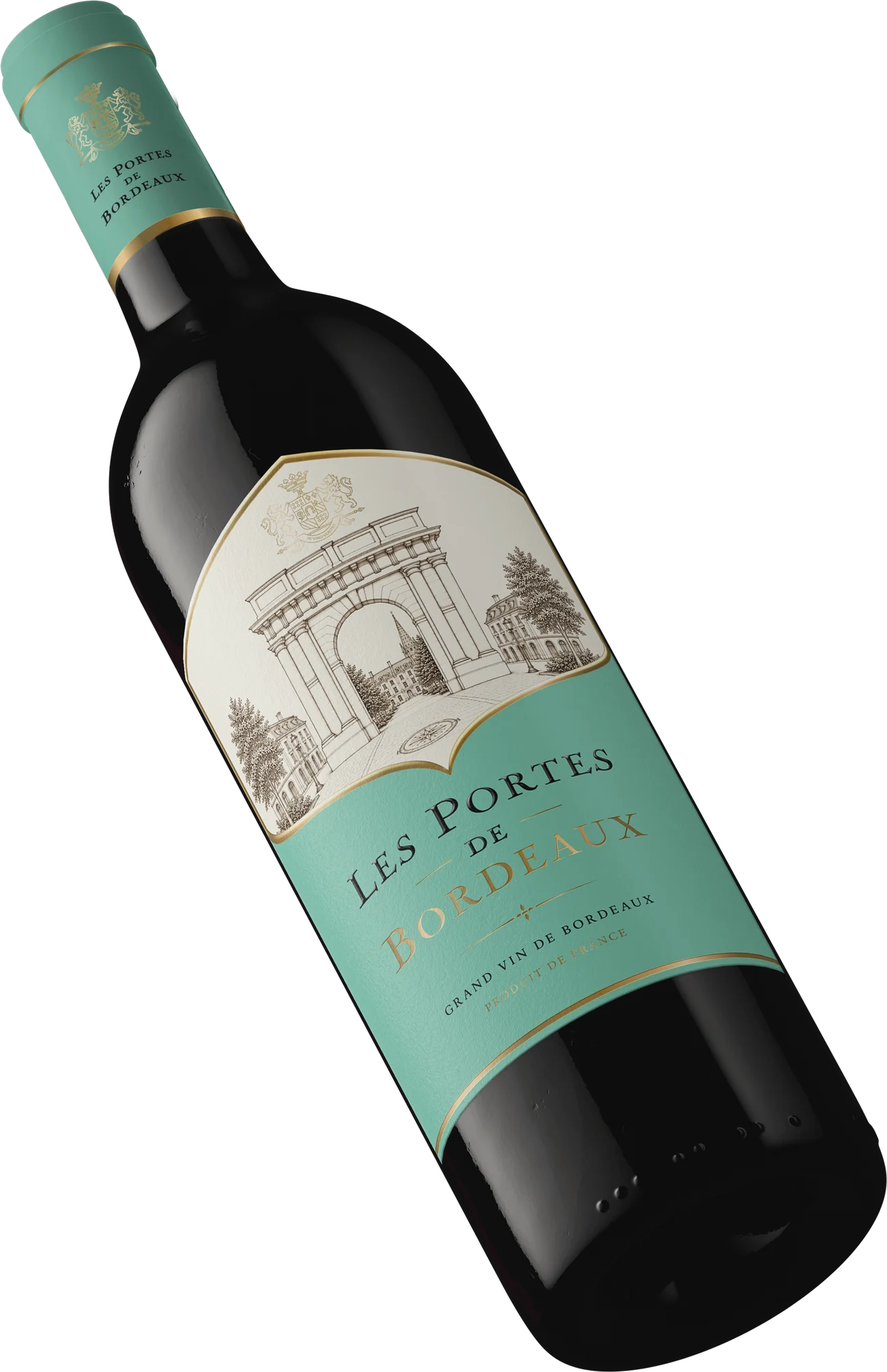
Same gate, same crest,
same standards
A red, a white and a rosé: three wines, one family, under the same label.
Rouge
- Varietals
- Merlot 90%, Cabernet Sauvignon 10%
- Soil
- Clay-limestone
- Average vine age
- 25 years
Rich and dense, with real complexity and concentration of aromas. Blackberry on the palate, then the finesse of fresh fruit and a spicy finish.
Pairs with
Red meats such as beef, lamb and duck; aged cheeses like Camembert or Vacherin; chocolate desserts.
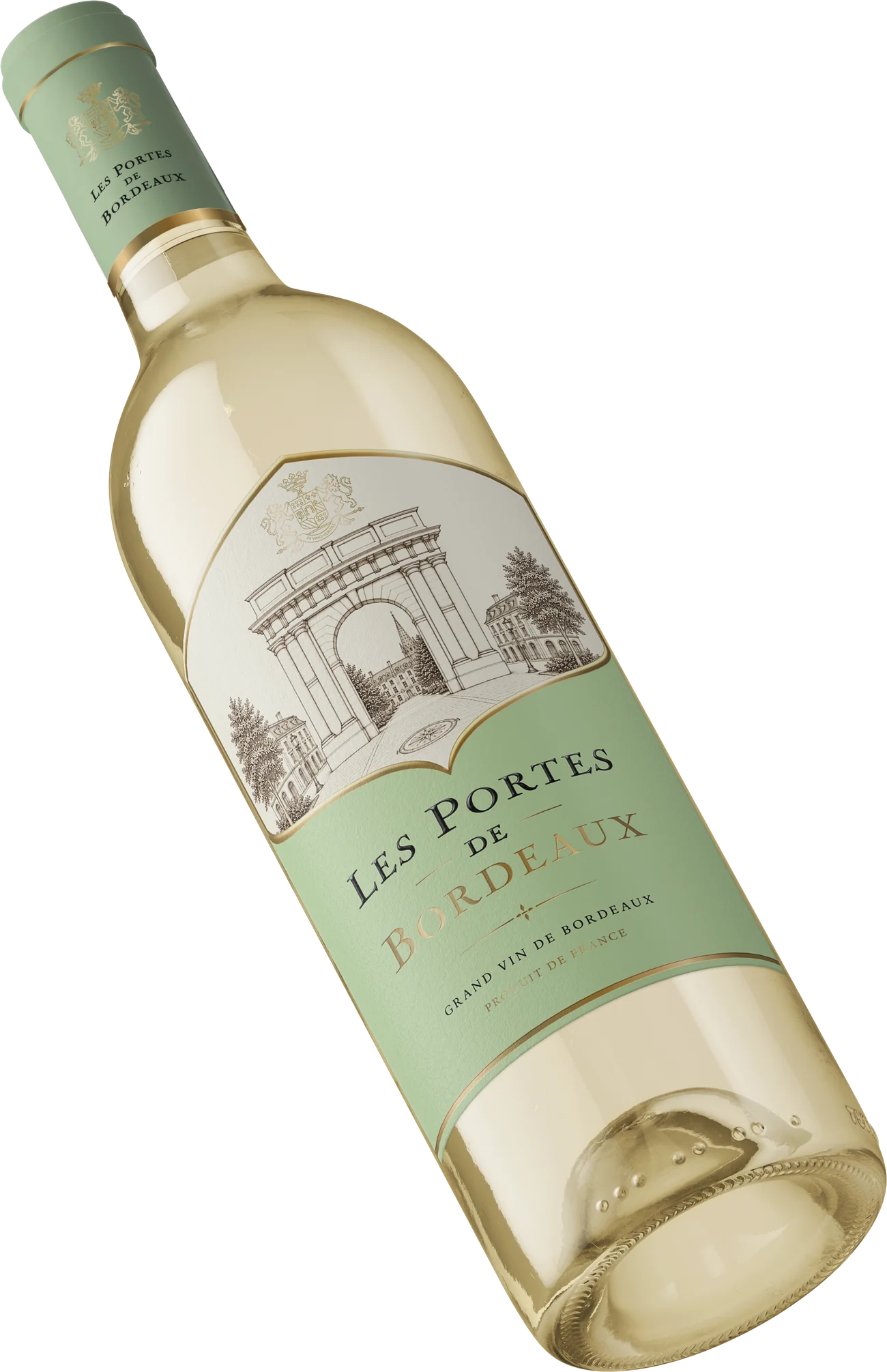
Blanc
- Varietals
- Sauvignon Blanc
- Soil
- Clay-limestone
- Average vine age
- 15 years
Very pale yellow with bright green highlights. A powerful nose of ripe mango and fresh citrus with a hint of lime; generous, round and well-structured, with a long finish of papaya and pineapple.
Pairs with
Seafood and grilled fish, Asian cuisine, and cheeses such as goat cheese and Comté.
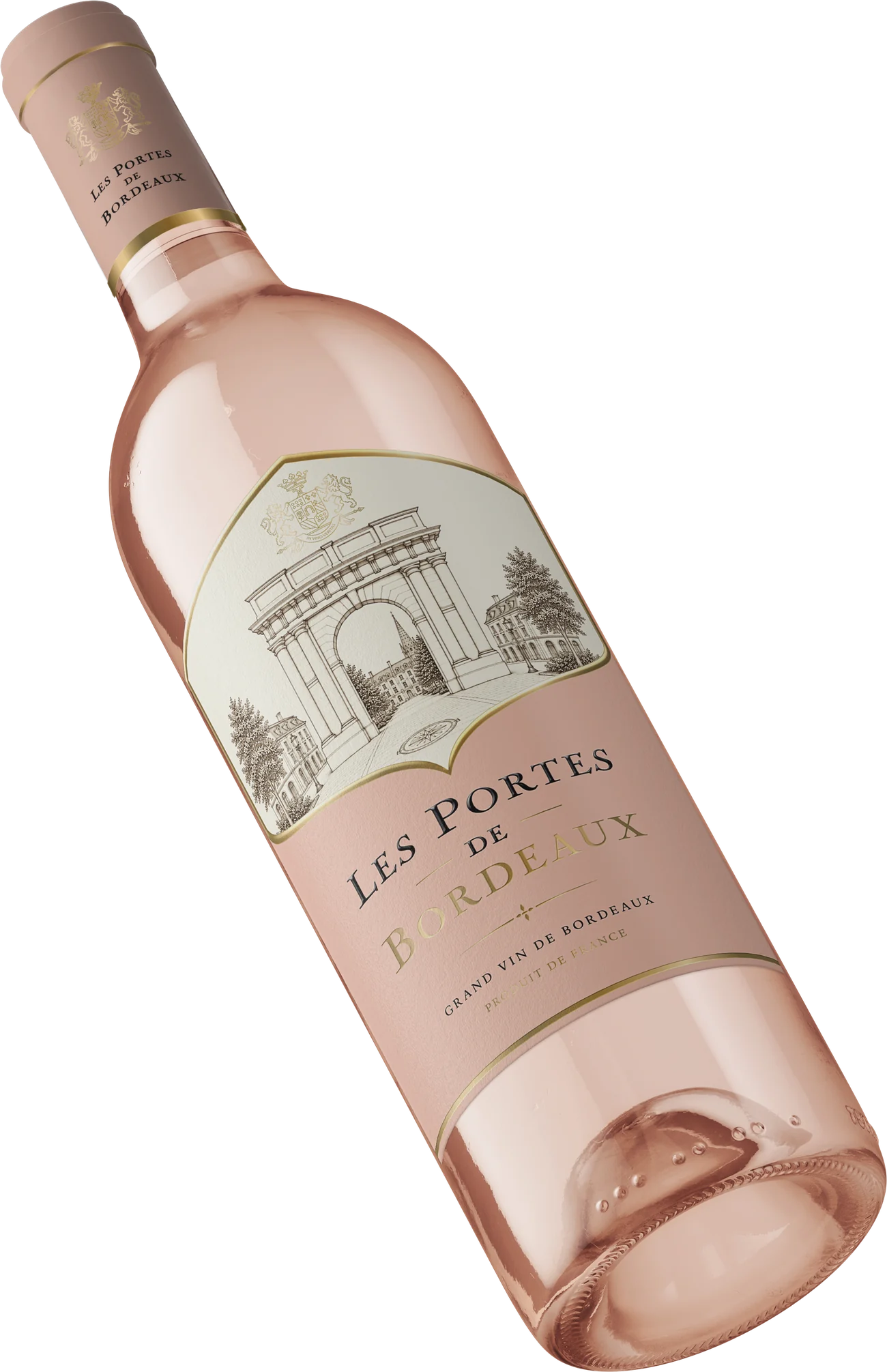
Rosé
- Varietals
- Merlot, Cabernet Franc
- Soil
- Clay-limestone
- Average vine age
- 20 years
A delicate pale pink, bursting with fresh aromas of raspberry, wild strawberry and grapefruit. Lively acidity balanced by a smooth, silky texture.
Made for
Sunny days and relaxed meals: vibrant, refreshing and versatile.
A range with the same character, year after year.
The wines of Les Portes de Bordeaux are made as true Bordeaux, classic in style and modern in the making, then held, vintage after vintage, to the same profile. Here, consistency is not luck. It is the work.
Since the first vintage in 1996, three decades of the same selection and the same oenological monitoring, behind the whole range.
Classic Bordeaux, made for today
A true-to-type Bordeaux: the structure, balance and freshness the region is known for. The classic codes are all there, vinified with today’s precision, for wines that are polished and ready to enjoy.
Every lot tasted, every lot chosen
Each year the wines are tasted and selected one by one. Only the lots that match the profile of Les Portes de Bordeaux go into the blend; the rest do not, whatever the vintage.
Thirty years of oenological monitoring
Each wine is followed by oenologists at every stage, from vinification to bottling. That same attention has been applied without interruption since the first vintage, in 1996.
A straight line of quality
Vintages change; the wine in the bottle should not surprise anyone. The same style and the same level of quality, order after order: wines your customers recognise and come back to.
A gate. A label.
Bordeaux’s gates have long stood at the crossroads of wine and trade. Our label tells that story.
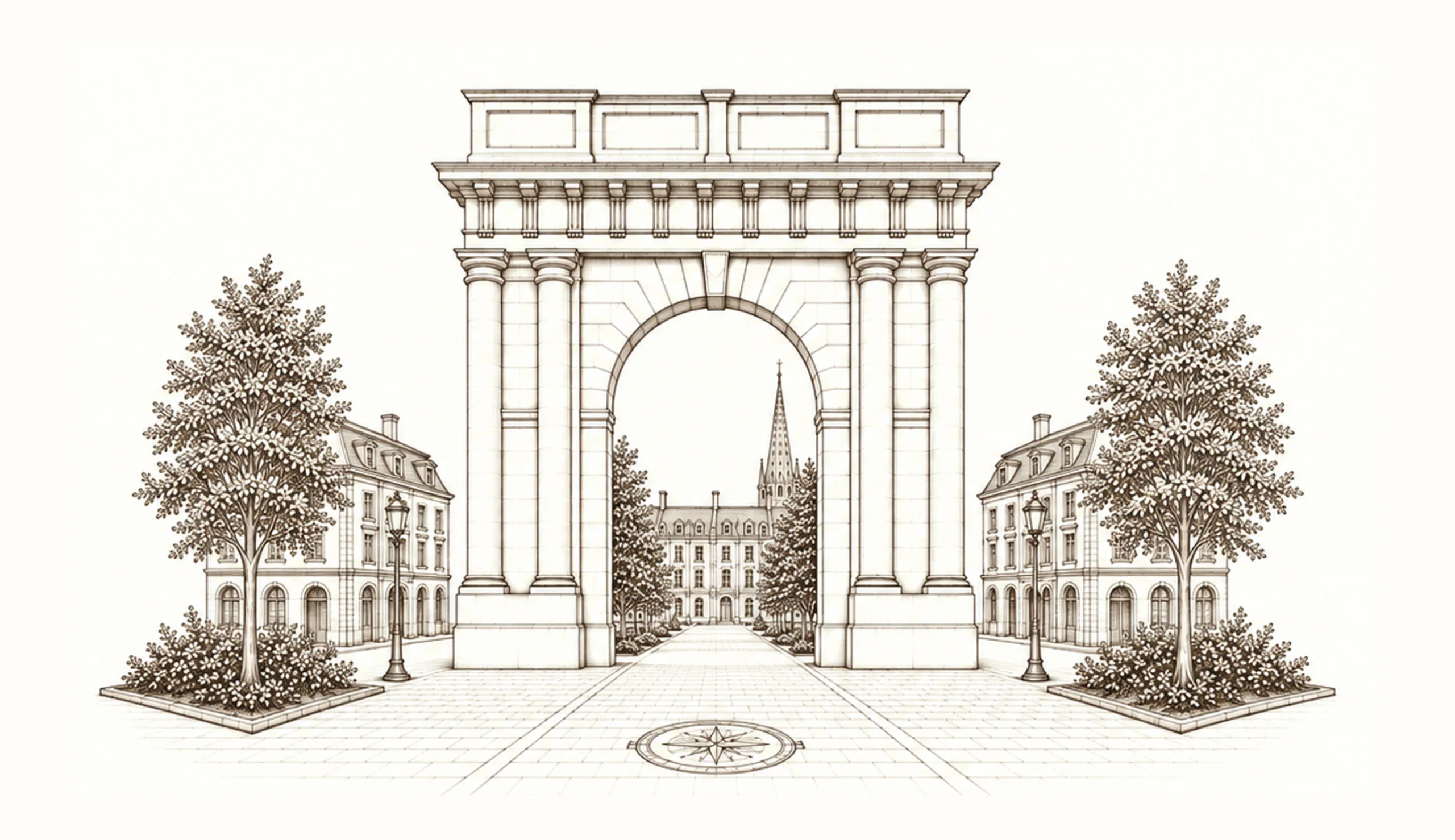
The gate is where Bordeaux wine met the world
For centuries, the gates of Bordeaux were where wine entered and left the city: counted, taxed, then sent on to the port and the world beyond. A gate on the label says in one image what this wine is: Bordeaux, made to travel.
Ours is drawn in the spirit of the eighteenth-century gates: a single stone arch framed by paired columns, built not to defend but to welcome. It marks the moment Bordeaux turned outward, and it sits at the centre of every bottle.
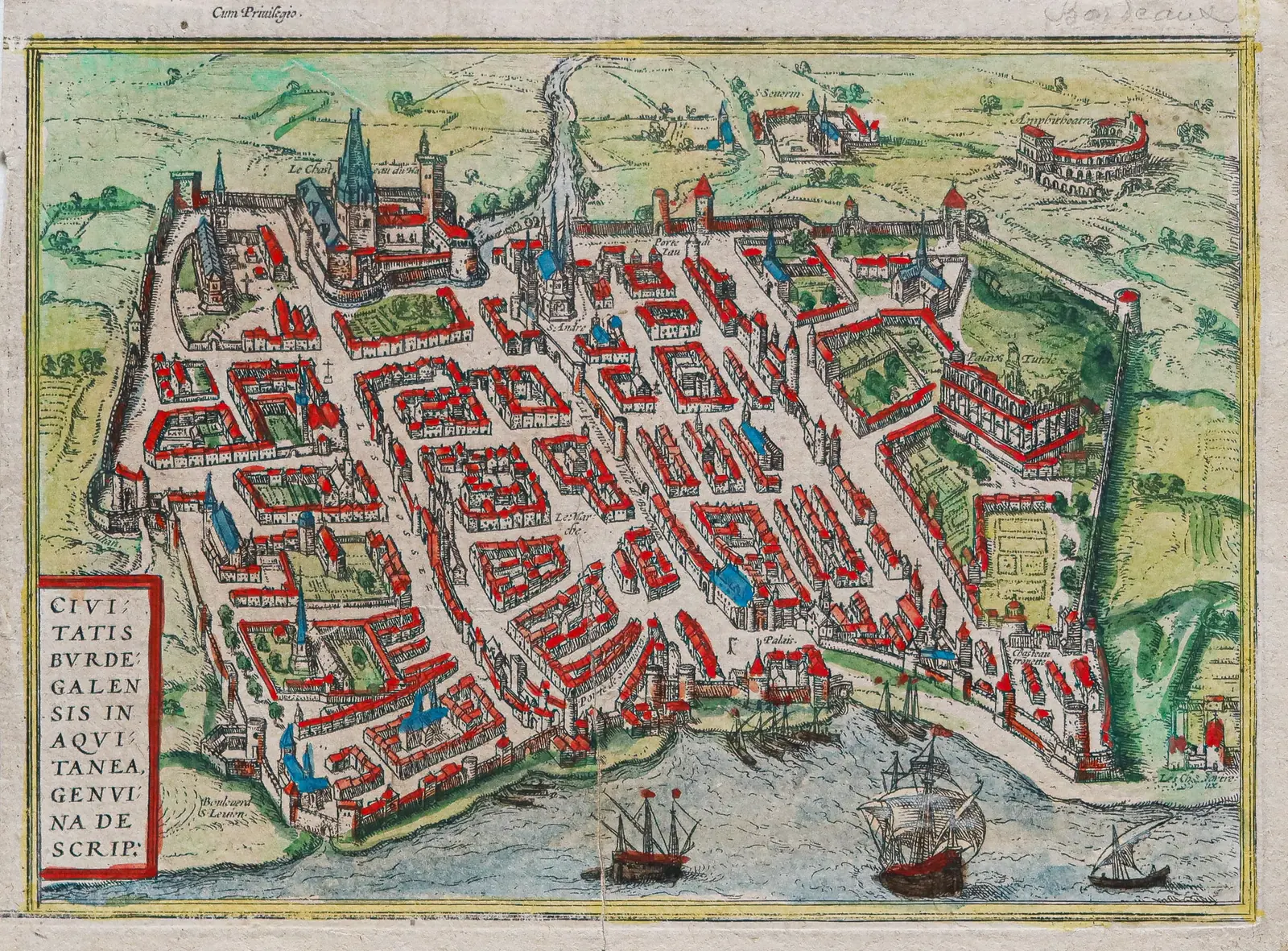
Since AD 300
It began with four gates in the Roman wall. As the city grew, medieval gates were added to guard it and to tax the wine passing through. In the eighteenth century, four classical gates turned defence into welcome. Three ages of gates, and each one opened Bordeaux a little wider to the world.
Around AD 300, Médoque, Cadène, Jovia and Navigère connected the Roman city to its surrounding countryside and port.
- Médoque
- Cadène
- Jovia
- Navigère
As Bordeaux grew, its medieval gates protected the city and controlled the movement of goods, with duties collected on wines entering and leaving. The Grosse Cloche, rooted in the thirteenth century, announced the grape harvest, while Porte Cailhau, built in 1493–1496, guarded an important entrance from the port. Beyond these walls, ships carried Bordeaux wines to England and northern Europe.
- Grosse Cloche
- Porte Cailhau
In the eighteenth century, Porte Dijeaux, Porte d’Aquitaine, Porte de Bourgogne and Porte de la Monnaie marked the transformation of a fortified city into an outward-looking trading centre, as wine exports expanded across the Atlantic to the Americas.
- Porte Dijeaux
- Porte d’Aquitaine
- Porte de Bourgogne
- Porte de la Monnaie
Les Portes de Bordeaux takes its name from this heritage: gateways connecting a wine region to the world.
What the label says
Les Portes
The gates themselves: the points where a wine region connected to the world.
An open gate
An arch in the spirit of the eighteenth-century gates, with the city seen through it.
Bordeaux
The origin picked out in gold: what passed through those gates, and what is in the bottle.